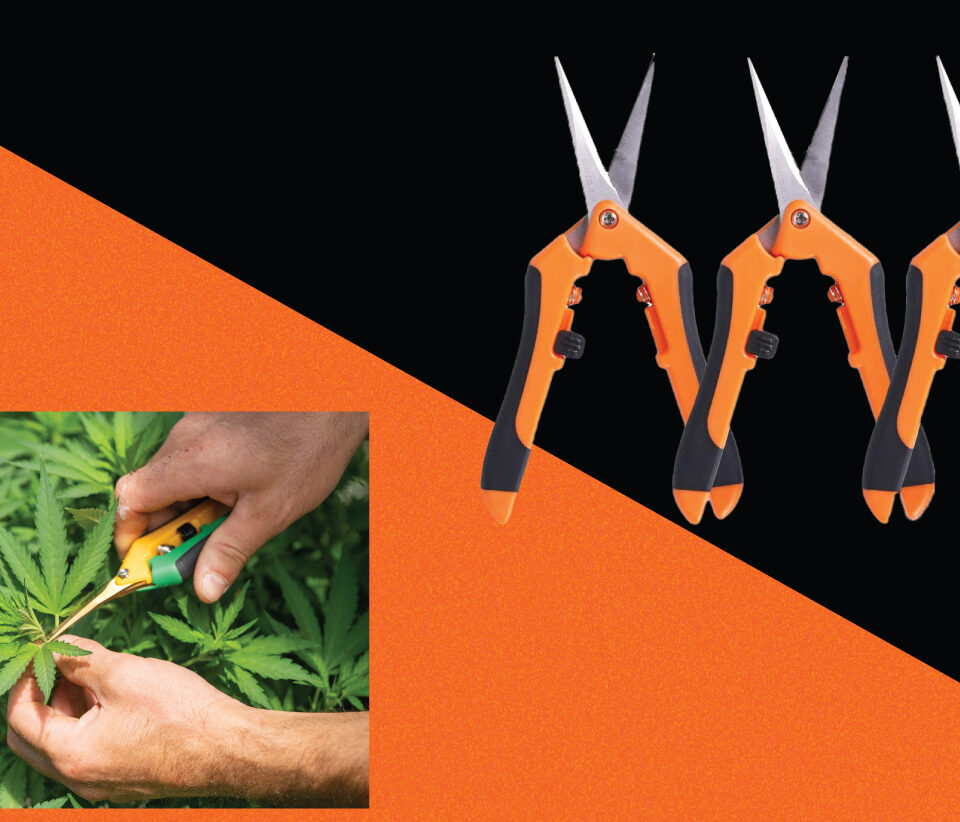


Trimming cannabis plant leaves is one of the most effective ways to manipulate and direct the growth of the plant. Trimming helps to limit the size of your plant, promote lateral branching, delay the onset of flowering, and increase the yield. While it may feel counterintuitive to cut off parts of your plant as it grows by trimming unproductive growth, you can redirect the plant’s energy and resources into developing quality buds.
Trimming is the process of cutting specific sections of the plant to encourage healthy growth. Trimming removes growth that is damaged, unproductive, or blocking sunlight from reaching the budding flowers.
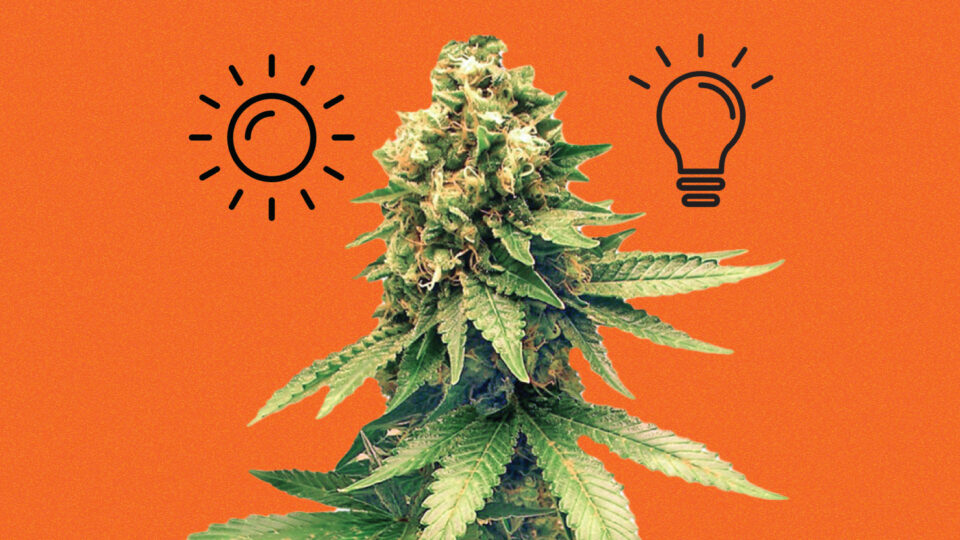
By getting rid of the excessive growth, the plant focuses its energy on nourishing and strengthening the remaining leaves, shoots, and buds. Trimming also promotes greater airflow and light exposure, fostering a more vibrant plant, and forming denser, more cannabinoid-rich buds.
Trimming should be done during the vegetative growth stage before the cannabis plant is mature and ready to flower. The plant should be at least a foot tall with several sets of leaves before you begin to trim. Trimming more mature plants that are approaching the flowering stage is not recommended. By trimming the plant too late in its growing phase, you may delay the onset of flowering or prevent flowering altogether.
The trimming of damaged, diseased, or dead plant tissue can be carried out throughout both the vegetative and flowering cycles. Yellow or brown leaves allow invasive microorganisms and pests to thrive. Remove these leaves to make sure they don’t fall and become absorbed into the growing medium.


